
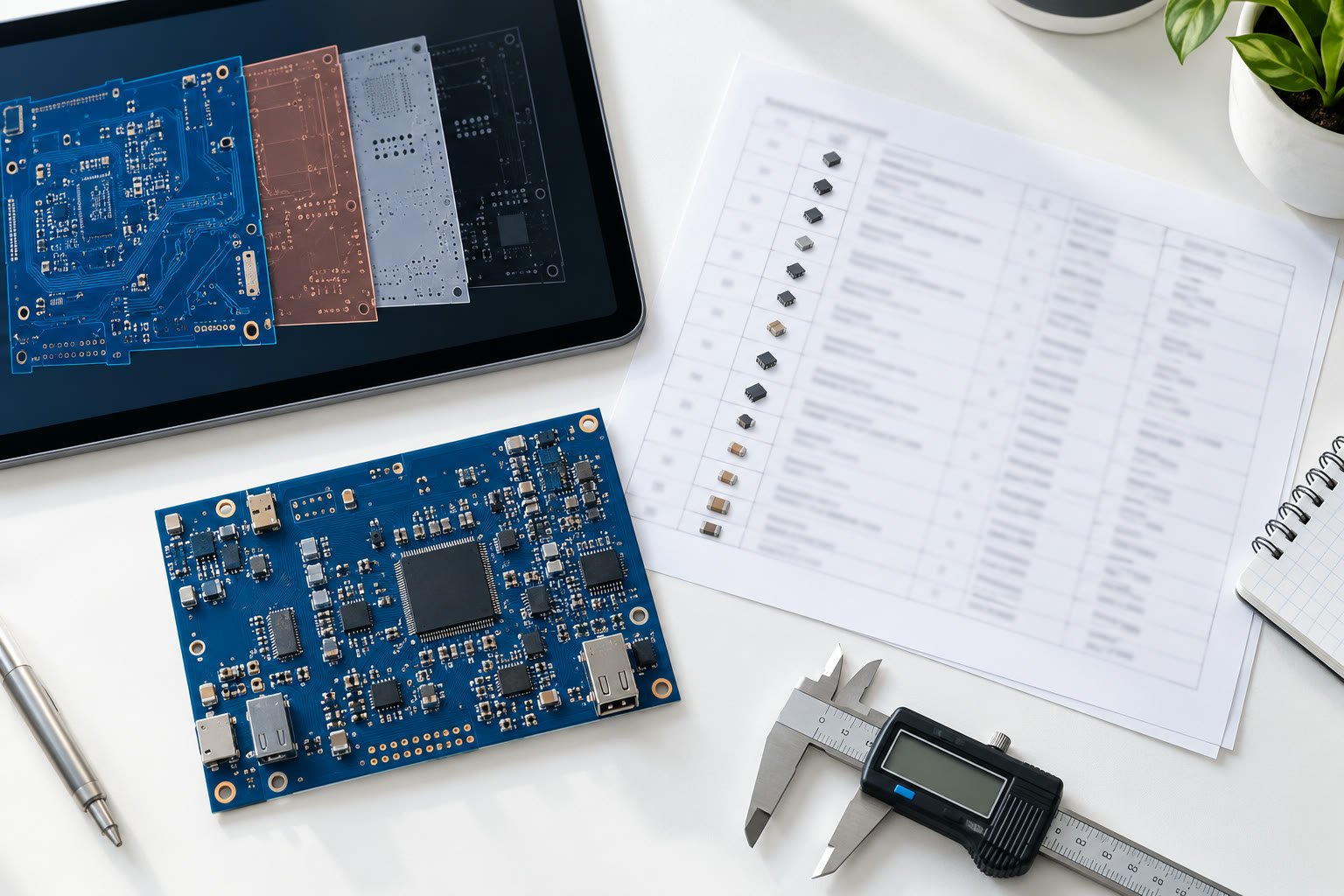
What happens after the first review
Design begins with constraints
A request such as make a control board is not enough to define engineering scope. Power, interfaces, loads, connectors, physical envelope, environment, firmware ownership, and acceptance behavior must be made explicit.
Use review gates instead of a single handoff
Requirements, schematic direction, component selection, layout constraints, and manufacturing outputs can be reviewed at agreed checkpoints. This gives the customer a chance to correct assumptions before they become expensive.
Design for the next real action
The target is not a decorative PCB image. The outputs must support the agreed fabrication, assembly, sourcing, programming, and test plan. Missing ownership or validation information remains visible.
Specialist work is matched to the project
PCBLaunch is a small project studio. Li Can coordinates scope and progress, and specialist engineering work is assigned according to the design needs. Production partners may be coordinated for fabrication and assembly.
A five-stage project path
- 01
Define requirements
Record function, power, interfaces, dimensions, environment, and responsibilities.
- 02
Agree design gates
Set review points for architecture, schematic, layout, BOM, and outputs.
- 03
Prepare the package
Create agreed source and manufacturing deliverables.
- 04
Review for build
Check open questions that affect fabrication, assembly, sourcing, and test.
- 05
Prototype and learn
Use the first boards to verify the design assumptions and update the release.
Expected project outcomes
01
Agreed design scope and open-question register
02
Schematic and layout deliverables at the agreed level
03
BOM and manufacturing outputs
04
Review package prepared for fabrication and assembly
05
Prototype plan linked to the design revision
Boundaries that stay visible
Board construction, quantity, pricing, timing, component availability, test coverage, and handover records are confirmed from the submitted project. Partner facilities are coordinated when required and are not presented as PCBLaunch-owned factories.
Frequently asked questions
Is design the main PCBLaunch service?
No. Design support helps selected projects reach prototype and production work. The main commercial focus remains prototype testing, small-batch PCBA, and existing-board work.
Can you start from an ESP32 or Raspberry Pi prototype?
Yes, a working module-based prototype can become a starting reference for a custom carrier or integrated board, subject to project review.
Do you guarantee certification?
No. Regulatory and certification requirements must be defined and handled with the appropriate specialist and evidence.
Which design software do you use?
The site does not claim a universal toolchain. Required source formats and handover outputs are agreed before work begins.