
What happens after the first review
File review before fabrication
Gerber layers, drill data, board outline, BOM, placement data, and assembly notes are checked for alignment. Questions are raised where the package conflicts or leaves an assembly decision open.
Prototype as an engineering checkpoint
The first build is used to expose manufacturing, sourcing, assembly, and test questions while the cost of change is still manageable. It is not presented as proof of production readiness by itself.
Pre-power checks
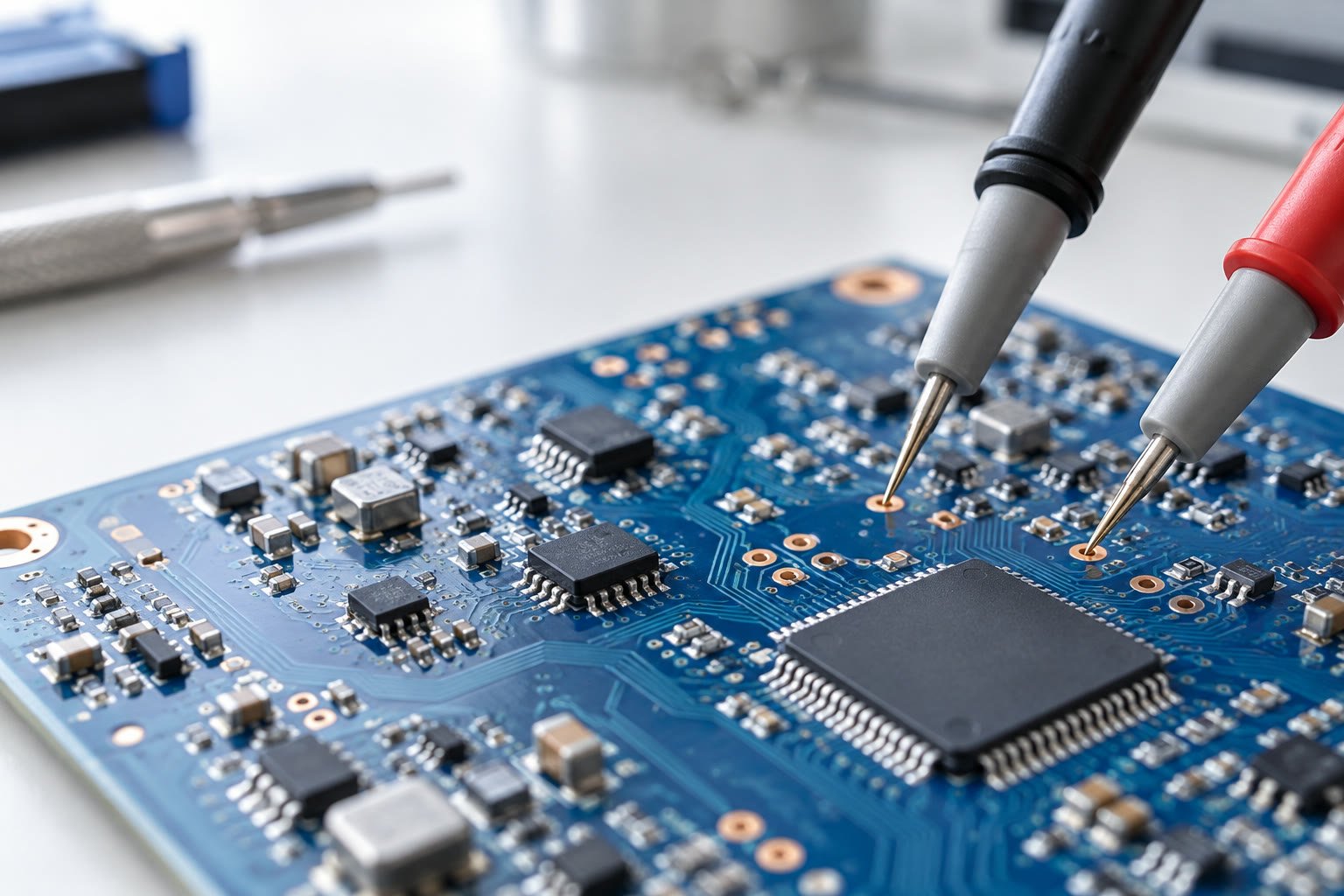
Where the project supports it, polarity, orientation, shorts, supply rails, and programmed-device prerequisites are reviewed before power is applied. The exact checks depend on the design and available information.
Functional testing with a stated boundary
A useful functional test names the input condition, action, expected result, and recorded observation. If a fixture, golden sample, firmware, or customer procedure is missing, the resulting limitation is made visible.
Close the loop into revision control
Issues are separated into assembly defects, sourcing decisions, design changes, documentation gaps, and test limitations. That separation helps the customer decide whether to rework, build another prototype, or release a small batch.
A five-stage project path
- 01
Review the package
Align fabrication, assembly, sourcing, firmware, and test references.
- 02
Confirm prototype scope
Set quantity, assembly needs, hold points, and decision owners.
- 03
Build the first boards
Coordinate fabrication, sourcing, assembly, and programming inputs.
- 04
Apply agreed checks
Run the defined pre-power and functional checks with visible limitations.
- 05
Decide the next revision
Separate rework, documentation, design, and sourcing findings.
Expected project outcomes
01
Pre-build question list
02
Agreed prototype and assembly scope
03
Testing scope tied to available procedures
04
Recorded observations and issues
05
Clearer decision on release, rework, or revision
Boundaries that stay visible
Board construction, quantity, pricing, timing, component availability, test coverage, and handover records are confirmed from the submitted project. Partner facilities are coordinated when required and are not presented as PCBLaunch-owned factories.
Frequently asked questions
Can you build from Gerber files only?
Fabrication may begin from a valid Gerber and drill package, but assembly also needs a usable BOM, placement data, and assembly information.
Do you write firmware?
Firmware development is not presented as a standard service. Customer firmware can be programmed or used for testing when the required files and method are supplied.
What testing methods are available?
Continuity, power checks, flying probe, ICT, or functional testing may be coordinated when suitable for the project. Coverage is not assumed from the method name.
What happens when a prototype fails?
The observed symptom, test condition, suspected cause, and next action are recorded so rework and design revision are not confused.
Can this lead directly into a small batch?
Yes, after the build package, open issues, sourcing choices, and test scope are reviewed and released.